
Freedom or loneliness?
Liberty or slavery, that is the question.

I came across a Charles Bukowski quote you may be familiar with.
And when nobody wakes you up in the morning, and when nobody waits for you at night, and when you can do whatever you want. What do you call it, freedom or loneliness?
—Charles Bukowski
When you can do whatever you want. The defining feature of today.
Bukowski asks an important question. What does modern freedom get you?
A modern liberation
The world is radically different from even fifty years ago.
We have liberated ourselves from the constraints of the past and are now free. No rules, no tradition, no servitude.
We are more advanced than ever. How backward our ancestors seem to us now.
And yet we have record levels of unhappiness. Increasing numbers are prescribed antidepressants, especially women, the most liberated among us.
Self-reported unhappiness reflects this descent as do rises in suicides. Polls routinely report widespread dismay at the emptiness of modern life.
Doing whatever we want doesn’t seem to be working.
Total personal freedom
The modern conception of freedom is to throw off the shackles of the past. No husbands for women, no drudgery for men, all you can eat buffets all the way.
Why hold ourselves back? Old fashioned behavioural controls are just social constructs.
The progressive view of liberty assumes the fence is to keep you penned in rather than keep the monsters out.
This has emerged from the belief that tradition is oppressive. Wives forced to serve husbands and children; men toiling for amoral capitalist masters; private behaviours hatefully condemned by bigots.
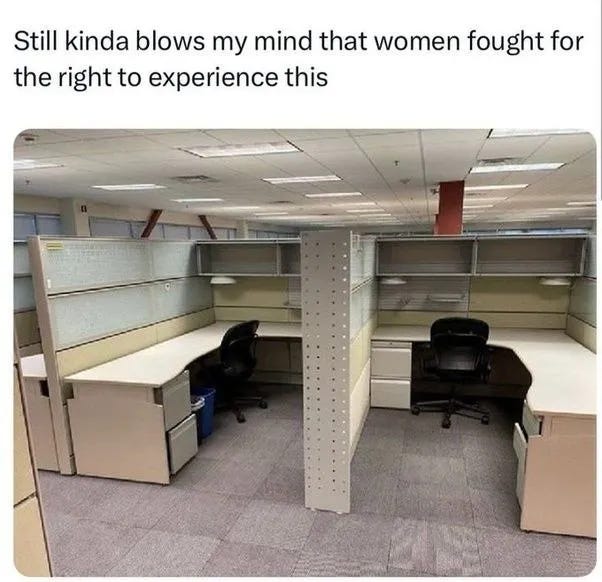
The modern mind reflects a lack of curiosity as to why traditions emerge. Everything is written off as hate or power, an attempt to dominate. It obsesses over systems of oppression, a flattering view of ourselves that imagines our recent ancestors as mindless brutes at the mercy of primitive urges to control others.
This is why we have a distorted view of freedom today.
Anything goes
Freedom has been recast as an absence of constraint. You can do as you wish. No one can say no. It is your right to be whomever you like no matter the cost to society.
Judgment is unwelcome as it challenges the progressive worldview where anything goes. Reality is whatever your lived experience tells you it is.
We are learning this doesn’t work. Constraints are known to encourage creative responses. Zero barriers means no invention, no magic.
When we can do anything we do little of importance. Everything drifts. Nothing works well.
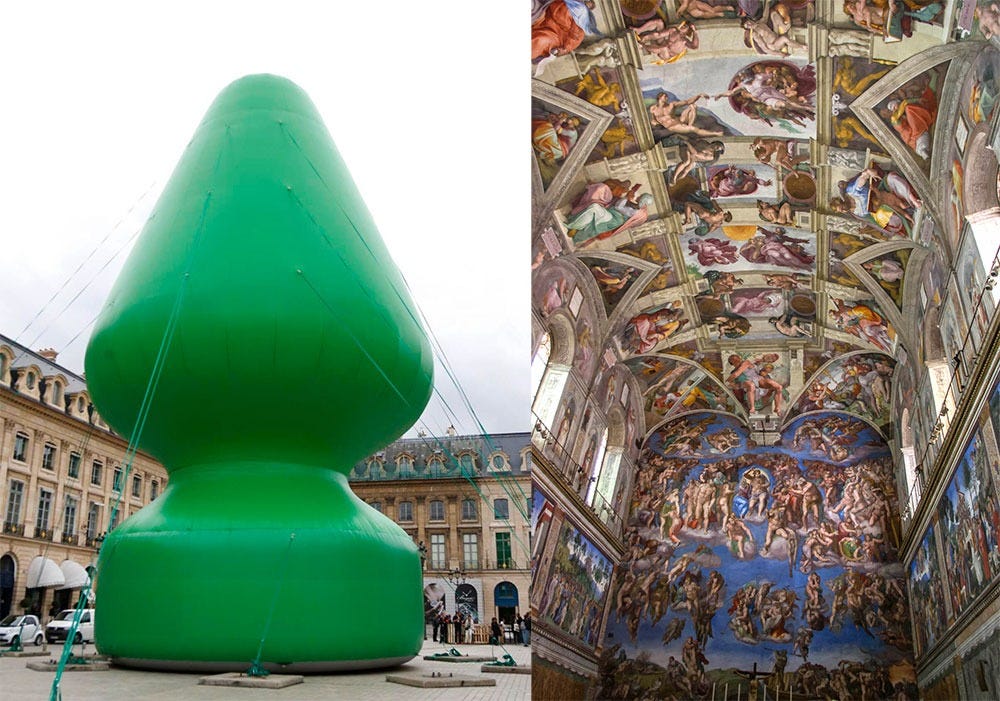
Most modern art reflects today’s anything-goes foundation and cannot compare to Michelangelo’s frescos. Who would argue they are the same except the deranged? Architecture is no better.
In Western nations the lack of external rules was understood as a sign of superior personal control, not that no rules ought to exist. The well-rounded person transcends the need for externally enforced controls. He doesn’t reject them but internalizes them.
Condemning longstanding traditions in the pursuit of personal liberty reflects a limited understanding of human nature. The simplicity of the progressive vision is mistaken for clarity. It is ignorance believing itself superior.
Because the foundations of this novel worldview are incomplete its real-world effects are unexpected to its proponents. Much to the surprise of those addicted to progress, total personal freedom does not liberate us, it enslaves us.
Zero constraint equals slavery
Rather than being a form of liberty, the modern conception of freedom, a life without constraint, is actually slavery, the antithesis of liberty.
We are not free when we indulge every whim, we are hedonistic; one of the worst forms of enslavement possible. We become captivated by our passions, barely able to control our urges.
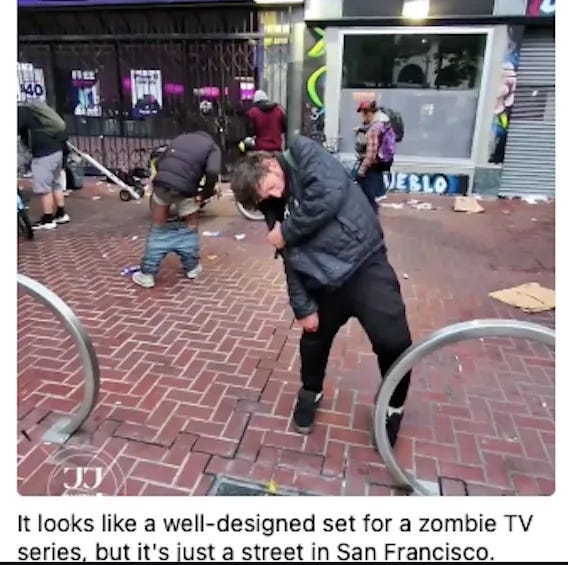
We see it everywhere. Addiction to porn, to drama, to phones. Compulsive behaviours are being normalized. We observe young and old alike lost to these things on buses, in cafes and in life generally.
Everyone indulges all the time. No one has the patience to be bored. We cannot be expected to endure even a moment of pain despite the mountain of literature reminding us everything valuable requires at least some sacrifice of which mild discomfort is just the first rung.
So we indulge. It is our right after all. Our entitlement. And indulgence begets indulgence. The nature of addiction is always more more more.
The end state of such indulgences is not freedom but licentiousness. A truly lost state of existence. A mind burned out by all the enjoyment it can get its hands on. A dopamine frenzy that eventually obliterates any capacity for joy in the pursuit of ever bigger hits.
That is why today’s liberations are failing so hard. Indulgence can never liberate you, only restraint and discipline can.
What Bukowski observed
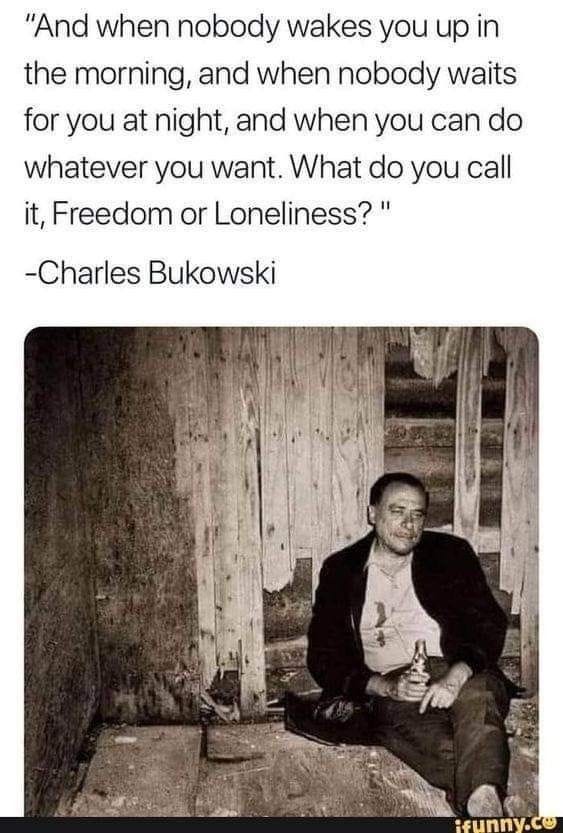
Some residual wariness of deep indulgence resides within us all. Perhaps this is why Bukowski’s observation resonates. It captures both the superficial benefit as well as the underlying cost that may be initially hidden but soon comes to define the whole sorry affair.
The fleeting desire for comfort we feel when overwhelmed is often best left untouched.
Cake is fine as an occasional treat, but cake every day soon loses its shine. You either abstain to recalibrate back to cake-as-treat, or you must up the ante. Then it is two cakes a day and eventually only cakes laced with cocaine and washed down with whisky will give you any thrill at all.
Such is the human condition. We learn these things, forget them, then painfully relearn them all over again.
Many of our traditions were based on restraint, the awareness indulgence is often the wrong path for a satisfying life.
Bukowski observed this and we should too. There is always a price to pay.
But it starts with accepting modernity and its rejection of traditional constraints must be reexamined if we are to get back on track.
Like Bukowski we must ask what we are really getting with the fun and games we are sold, liberty or slavery?
Good observation, Spiff. This is being studied scientifically as Evolutionary Mismatch theory.
Thanks to technological progress over the last few centuries, we changed our environments in such a way that previously healthy instincts now lead to dysfunctional behavior:
- taste for good food + abundance -> obesity instead of sustenance
- sexual urges + free infinity porn -> porn addiction instead of procreation
- information-seeking + attention hacking TV, apps, smartphones -> garbage instead of useful information
- the urge to satisfy needs + overabundance -> unbounded hedonism
- too much freedom & goodies -> loss of meaning
- the needs we could only satisfy collectively now can be satisfied individually -> loneliness
- my favorite: altruism + view of third-world suffering -> import infinity Bomalians -> collapse civilization
We can to a degree moderate these effects by recognizing them and rectifying them. The individual ones are doable, e.g. no unhealthy food at home, app/website/porn blocker, no TV at home etc. The collective ones are hard because most people don't think about this.
If we don't adapt, evolution will take care of it and regress civilization to a point where the instincts are adaptive again.
If only we had a rule book, or some kind of guide, a way to find the strength to take risks, trust others enough to start a family.