
Holding the inner flame
This is the way.

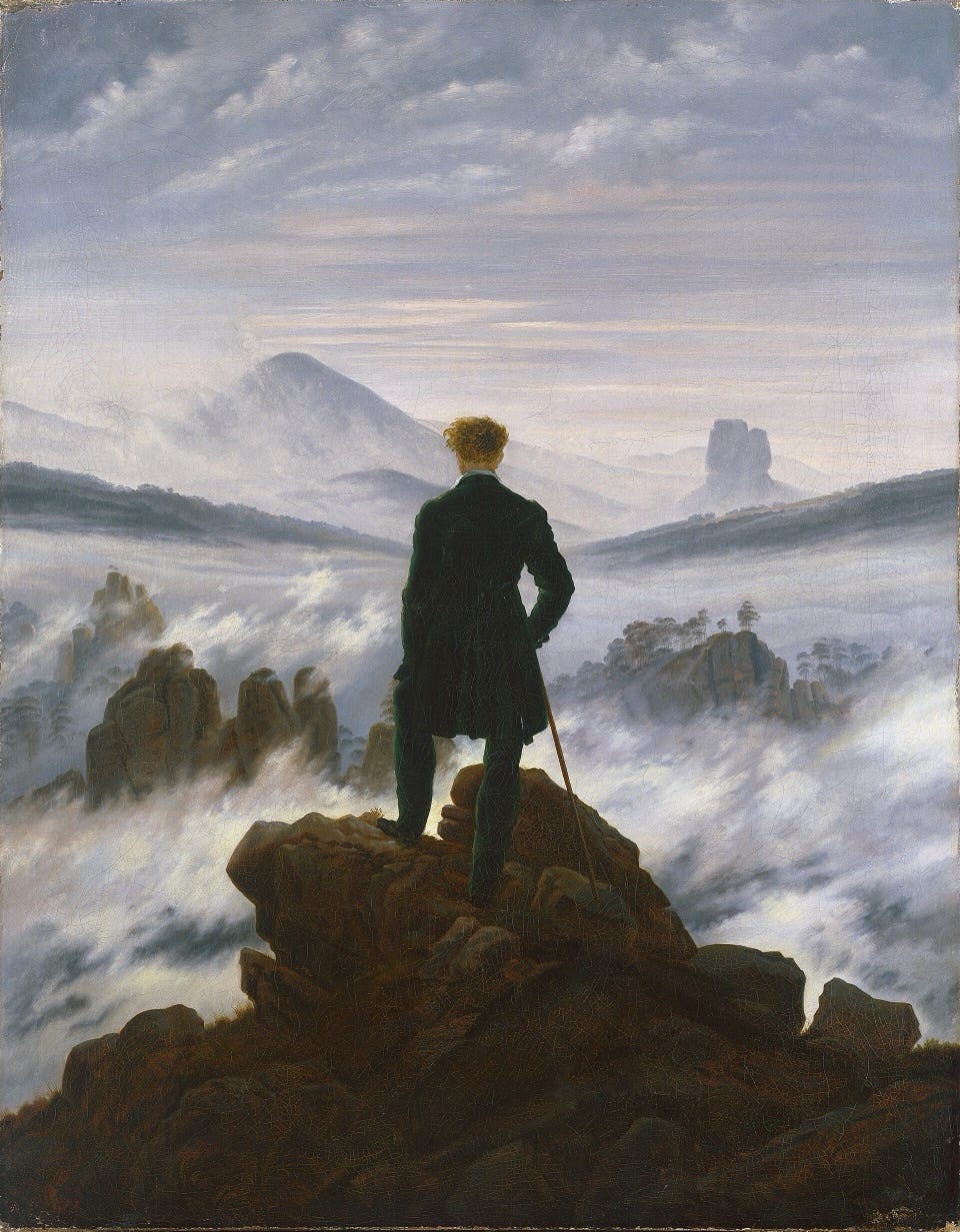
I found an interesting quote that is relevant for us today.
It’s easy to be a naive idealist. It’s easy to be a cynical realist.
It is quite another thing to have no illusions and still hold the inner flame.
-- Marie-Louise Von Franz
It reminds us enthusiastic idealism is comforting but usually wrong. Conversely, pessimistic forecasts based on today’s world are equally problematic as no one can predict the future.
Yet each has an aspect of common sense, and each has its appeal depending on how we think. These positions can feel right even when negative.
What works better is to be realistic and still retain enough hope and optimism our drive to move forward remains intact. This is harder than it looks.
Naive idealism
It’s easy to be a naive idealist.
Idealism is fantasy. It is a future state we invent or adopt. It happens inside our heads.
Ideals are based on mental models of how life could be. They have their place, but only if understood as fictions that do not exist.
They are attractive. The clue is in the name. They are ideals. Perfectly behaved people; effective and efficient organizations; a prosperous society with no conflict. Who would not aspire to such things?
Ideals are so appealing we often protect them from reality. When we find out friends and neighbours do not share our aspirations around economics, immigration or energy policy, we may push them away. We protect our vision of life from scrutiny.
An idea can then remain perfect, stuck inside our heads and not subjected to the rigours of real life.
As we cling to these fictions they change who we are. We become someone committed to gender equality or climate justice. Sensible challenges to these ideas then feel like personal attacks.
Idealism tends to create mirages. Perfect fantasies superimposed over imperfect reality which is then found wanting.
We can make the mistake of becoming upset normal life does not measure up to a mental model. Idealism often blinds us to the opportunities we have today.
This especially affects the progressive-left whose views of the world are usually idealistic and impractical.
For the worst among them criticism of their aspirations around gender, homosexuality and diversity are met with hostile responses that make little sense to those not on the left.
Idealism is naivety writ large. It doesn’t work. No plan survives contact with the enemy.
Systems built on fantasy can inspire us to reach higher, but they cannot guide us through the challenges thrown up by reality. All building happens in the real world with its natural constraints and limitations. This is the only place we can ever live and we are required to pay attention to it.
But even this can cause problems.
Cynical realism
It’s easy to be a cynical realist.
The opposite extreme from naive idealism is just as bad. Focusing on the horrors of reality to become trapped in a pessimistic or nihilistic take on the future.
This does something similar to the idealist. It conjures up a little movie inside our heads where we imagine the worst outcomes, the most negative consequences. We are losing. There is no escape.
We can find ourselves in a doomloop, fed ever bleaker material by an algorithmically driven world we voluntarily inhabit. We seek out material that reinforces our existing ideas. We ignore or reject that which challenges us.
This very human failing ignores the famous maxim, garbage in, garbage out. We can quickly convince ourselves the future is bleak.
Many of us have been there, lost in a vortex of doom. The abyss is tempting.
It encourages a form of passivity. Why do anything if we will lose it all?
But it ignores the unpredictability of life. We have no idea what is going to happen even if some trends appear inevitable.
The limits of the human mind are not subjectively well understood. Our enthusiasms feel important to us. We convince ourselves quickly.
It is the clarity offered by a vision of bleak decline and destruction that attracts. Nothing looks possible, so it crowds out any hope.
This gets us off the hook. It absolves us of effort. Why try when we are all doomed?
Many on the dissident right fall into this trap. Demographic change, economic decline, the rise of totalitarian surveillance. It does look bleak. What are we to do?
This encourages a frustrating inertia we see in many conservative movements. Nothing can be done and they have the data to prove it.
But this is wrong.
Realism plus optimism
It is quite another thing to have no illusions and still hold the inner flame.
Von Franz’s quote reminds us to look at the world as it really is. Not based on ideals that distort observation. To avoid fear, pessimism or nihilistic filters that degrade our perception.
Absorb the facts and make direct observations to make a clear assessment. But also to retain a sense of optimism and hope then use them to create the energy for action, not idealistic plans likely to fail.
We must avoid the false certainties of idealistic visions or end-of-times despair; neither are likely.
Combine these together to form a powerful method of assessing the world and then act upon it with clarity of purpose.
That is the strongest combination, real-world assessment plus drive towards a better model, then concrete actions towards it, all of it tempered by paying attention to what actually works and what the world is telling us not what we want it to tell us.
Few have this skill. It must be cultivated and practiced. But it beats today’s extremes of fantasy and doomlooping.
The way forward then is zero illusions while holding our inner flame.
Naive idealism: The domain of idealogues, eg socialists.
Cynical realism: This describes those who eg believe there is a climate crisis. There isn’t of course.
Conservatives tend to inhabit the middle ground. They witness the appalling effects of uncontrolled migration of incompatibles, & know it can, & is, destroying western cultures. But such migrants can be returned to their country of origin, solving the problem.
The extremes are generally inhabited by leftists.
This is where our pre-Christian ur-kultur and true heritage comes in:
We are Doomed, and that is why we fight.
Oden /knows/ - for certain, no avoiding it, no excuses, no nothing - that Ragnarök /will/ come, and that is why he fights against it. Tor fights Jormungandr and dies, and wins. Fenrir devours Oden, but Vidar stomps on the Wolf's lower jaw and breaks its neck and impales its heart.
Death and loss, life and victory, turning and turning like the Wheel of the Sun, our ancestors' oldest symbol for strength, victory and good.
Or Cú Chulainn (I was taught to spell it Cuchulain but apparently that's no longer correct?), who fights to his death tied to a standing stone so he will die on his feet while still standing.
Hektor, Akilles, or Aeneas escaping the ashes of Troy to go on to found Rome. Ilya Muromets, Susanoo-no-Mikoto, Enkidu and Gilgamesh, and so many others:
Doomed to Fate, yet fighting every step of the way and by fighting achieving victory no matter if they live or die.
The kenning of this is, that Doom does not mean "hopeless" or "the end"; Doom means that you have a Fate, that you are indeed Fated from birth and that the measure of your mettle is decided by how you hold yourself while shouldering this.
After all, the cost of life is pain.
---
PS: What about a cynical idealist, or a naive realist? A cynic sees things as they are, so what happens if the cynic also holds an ideal to strive towards? Someone who is naive has the optimism and fantastical creativity of a child, and so what can come out of that someone also being a realist anchoring that naivite to reality?