
The sugar rush
The things we crave can kill us.

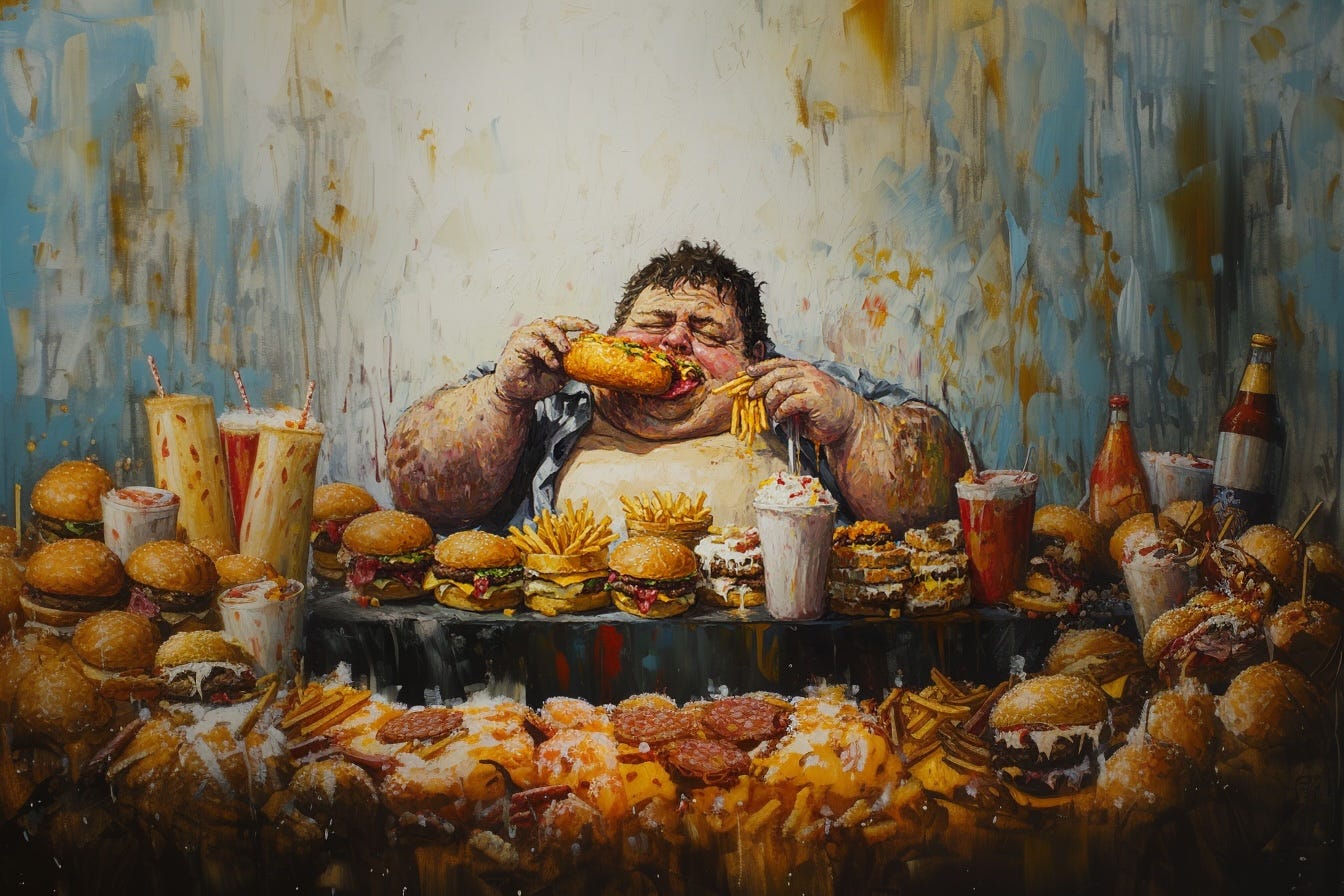
The human brain responds positively to sugar. It excites our reward centres. We often crave it in various forms. We can become addicted.
Yet the view emerging from nutritional science is sugar has become the great poison. After decades of trashing traditional fats and meat the evidence points to sugar as the real danger in our diets.
This seems at odds with our innate drives. How can we crave something that is so unhealthy?
A matter of survival
Sugar craving is a survival trait that no doubt evolved over time. In an energy scarce environment the large calorific return of sugar makes its pursuit worthwhile.
A large bee’s nest can yield 100lbs of honey (45kg), which is roughly 140,000 calories, enough to keep many families alive.
Craving the sugar, with reward centres firing away just at the thought of it, must have helped some of our ancestors overcome the difficulties of acquiring honey and perhaps other sources of sugar.
Desire for energy rich foods can be an advantage in the right circumstances. It is less of an advantage when your local supermarket has several billion calories lying about in handy packages.
Our ancient drives are not so well suited to the convenient world we have created for ourselves.
Physical, mental, spiritual
A similar dynamic seems to hold true for physical, mental and even spiritual aspects of our lives.
We are wired to preserve energy. The alternative, to exert ourselves, often faces mental resistance. Many people resist going to the gym or taking the stairs. We seek ways around physical exertion. This aversion feels natural. We have to fight to overcome it.
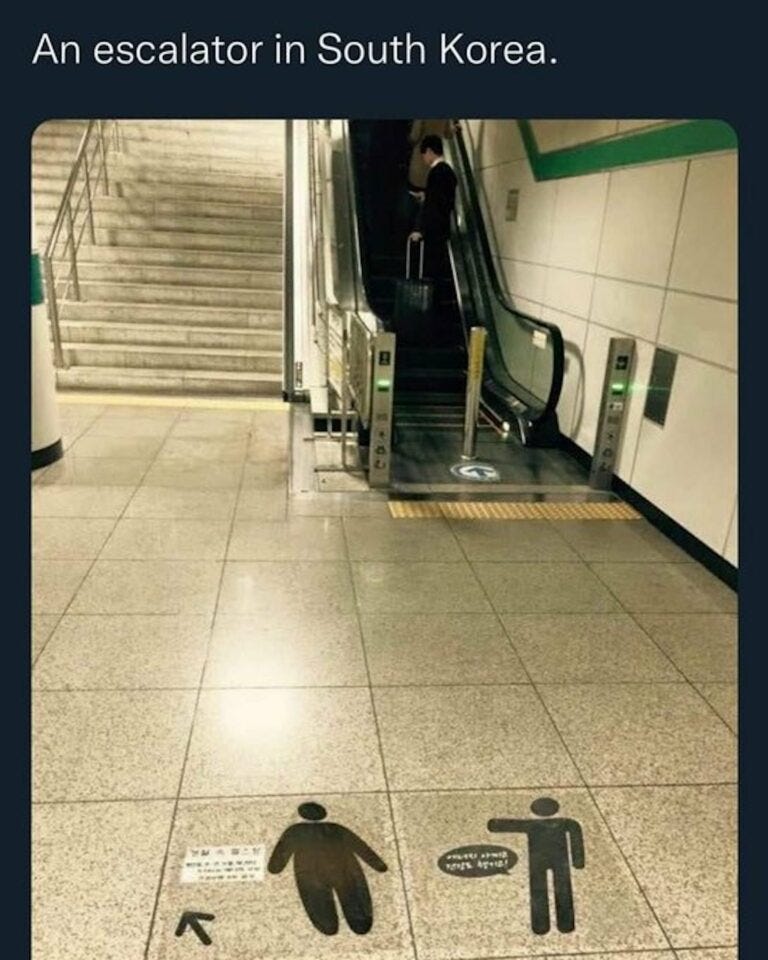
The preservation of energy is a survival trait that makes sense. But our environment has changed. Calories are no longer scarce. Many are now fat because their ancient drive to preserve energy is at play.
We have to force ourselves not to use conveniences we specifically invented to ease life, like cars, lifts or escalators. We must consciously override our instinct to preserve energy. It requires effort and even training.
We avoid mental effort in a similar way. We embrace things that are cognitively undemanding and it feels good. It feels like relaxation.
We don’t read because we now have a supply of easier distractions at our disposal, much of which is becoming ever more convenient to consume. Immersive video games using VR goggles and films with soundtracks and special effects to suck us in are just two examples.
Stage plays were an earlier incarnation of this phenomenon, with costumes and scenery. Actors brought the play alive which would otherwise have been words written on a page.
With novels we must supply the images ourselves.
Blockbuster movies and computer games are probably the most effortless forms of entertainment we currently possess. But it won’t be long before biochips appear. They too will be sold on their capacity for us to lose ourselves in a fantasy world.
Like loafing about and eating sugar, we may be drawn to it naturally, but is it good for us?
Even belief systems used to take work. A childhood going to church, maybe some bible reading. Learning how to overcome being a sinner.
Later in life we would perhaps explore some meaningful thing that took effort. A new philosophy, a grasp of psychology or self-help. Perhaps reading great thinkers from the past to develop a working philosophy of life, economics or politics.
When the main transmission method was books this all took time and effort. A real investment. Many did it because they have a need to embrace something, like cavemen risking angry bees to get the honey they crave.
But today’s belief systems are available on TV and social media feeds.
Tik Tok and YouTube provide the full suite of modern religions; climatism, feminism, socialism, technocratism, racism. You name it, you can get it free of charge, beautifully edited so you don’t even know it is there.
Many of these beliefs are similarly delivered through traditional media. Movies, soap operas, comics. Today’s religious substitutes have dislodged traditional methods of embracing the spiritual plane.
And it works. No one goes to church but everyone knows the planet is dying and women are oppressed.
Modern belief systems go down easy because they are expertly focus-grouped to hijack our spiritual centres designed for a quite different time. Every atheist has a god-shaped hole he can’t quite fill.
The NPC meme alludes to this. Modern manufactured causes effortlessly slotted into an innate desire to believe in something.
The state of Western man
All across the West we are physically declining. We are fatter and sicker than our ancestors.
Our descent is a consequence of affluence. We have rich men’s diseases thanks to consuming processed food along with sugar and refined carbohydrates. Combined with a general lack of movement we witness physical weakness and widespread illness.
We are increasingly mentally compromised. Minority obsessions our grandparents would have rejected pass uncommented. Digital IDs, control of what we can read, jailing people for things they say.
Many seem unable to think critically even about issues that directly affect them. Their mental muscles are not being exercised as they once were. Almost no one can field a coherent argument against government-controlled ID systems or programmable digital currencies.
Our belief systems are downloaded from central command, all taken on faith. The unaffected look on in a kind of awe. Can people really believe in patriarchies, systems of racism or the imminent death of the planet?
All this is because of ease and comfort. Fat, unthinking fanatics characterize today’s world. They are Western man.
Starvation is the new gluttony
Humans have discovered that fasting helps maintain health. This seems counterintuitive. How can intentional starvation help us?
The benefits are well documented. Weight loss, lowered insulin resistance, metabolic reset and more energy. Even increases in testosterone and IQ.
This is useful to understand. The solution to our woes may run counter to how we feel. A good life means doing things that don’t feel good in the moment.
The secret to understanding why fasting works is to understand we are built for famine. Intentionally going without food triggers physiological mechanisms our species evolved to assist us but lie dormant in these easy times we live in.
And so it is elsewhere. The great food and nice wine are treats. When they become staples we decline. It is excess that damages us, indulging feelings we evolved to help us survive in more difficult times.
Craving sugar works when there is almost no sugar to be had. It destroys us when it comes in 2lb bags.
It can only be fixed if we understand what our aversion to hardship is doing to us. Convenience foods, driving everywhere, 24/7 entertainment, no time to think or get bored.
Our lives are so packed with fun and distraction it has become our norm. So real life is dull by comparison, unbearably so for some. All the easier then to listen to those ancient drives that feel so right. The sugar, the loafing about, the readymade beliefs that win us applause. No effort required.
The goal is to understand our need for hardship. Take the stairs and put down the carbs.
Take the mental stairs too. Read a book or other cognitively demanding task, even if it is just adding up numbers in our heads.
And our spiritual void. It is useful to try to reach beyond the comforting positions everyone else adopts, to stretch our spiritual muscles.
Perhaps simplest of all is to accept we are designed for hardship, not ease. When we embrace this counterintuitive thing, we flourish. So put down the device, avoid the cake, and discard the Latest Thing. Do it the hard way and reap the benefits.
“With novels we must supply the images ourselves.”
Wonderful essay. A comment on the above observation. Yes, one could use your observation to support laziness, but there is another aspect of humanity such that I’ve come to notice over a lifetime—one of imagination. How many times has one noticed that a “best selling” book, when rendered on film, under performs box office expectations? Often we find complaints that the leading actor or actress (yes I’m unapologetically sexist) is complained about by loyal readers of the novel in question. The complaint most often is that the actor is *not* a good fit for the lead as described in the novel—quite often in fact.
Why? Well, imagination. The image in your mind of a strong, handsome, hero is different than mine and so forth. A novel therefore has as many such images as readers—each one suited to the specific readers’ understanding. The film version however can only have one who is chosen to match the producers’ understanding. Hit or miss when compared to the myriad imaginings of a large audience. Seen this numerous times.
One recent example are the “Reacher” films, which attempted to portray Tom Cruise as Jack Reacher. That lasted for two films. Lee Child had to withdraw film rights and apologize to his readers for such a “Hollywood” portrayal of their beloved ‘heroic’ character.
Superb. A very real issue which is also an apt parable.